

October 12, 2026
The Week Ahead
Cotton finished last week on a better note than expected, but a few factors could still test that recovery. Selling across agriculture, Wednesday’s inflation report, and questions surrounding the U.S. crop will all be worth watching.
- Wednesday’s inflation report could give the dollar its next push in either direction. Expectations for another Fed rate hike later this month have eased, but a hotter-than-expected CPI reading could bring those concerns right back. Thursday brings PPI and retail sales, both of which will also be worth watching for clues on inflation and the strength of the consumer. Any relief in the dollar would certainly be welcome for U.S. cotton.
- With China back from holiday, we’re keeping an eye on demand. U.S. export sales have been a little more encouraging recently, and the lower prices appear to be attracting some interest. China has also booked cotton for next year, but we still have no specifics about recent trade discussions.
- Harvest results will be particularly interesting over the next few weeks. USDA’s larger production estimate has raised some questions, especially in light of the high abandonment of dryland acres across the Southwest this season. There is also plenty of attention on the hurricane damage across the eastern Cotton Belt, with the extent of the quality losses still uncertain. Tuesday’s delayed crop progress report should give us another look at how harvest is moving along.
 Market Recap
- Cotton managed to recover some of the previous week’s losses, with December futures gaining 166 points to settle at 80.54 cents per pound. Monday got things started with a 198-point rally, but prices struggled to build on those gains through the middle of the week. Friday brought the biggest surprise when USDA raised its U.S. production estimate instead of making the cut the market expected. December dropped sharply following the report but recovered to finish the day 60 points higher.
- There were also some encouraging signs underneath the week’s price recovery, despite the alleged higher crop in the U.S. Speculative traders continued to sell, but commercial buyers were willing to step in at lower prices. China also returned from its holiday with stronger cotton prices, providing another positive development after a pretty rough stretch for cotton.
- The sell-off across agriculture is worth keeping an eye on, even if cotton has its own story right now. Friday’s USDA report was particularly rough for row crops, and speculative traders have been pulling money out of several agricultural markets. With considerable speculative buying still in the broader commodity complex, there could be more selling ahead.
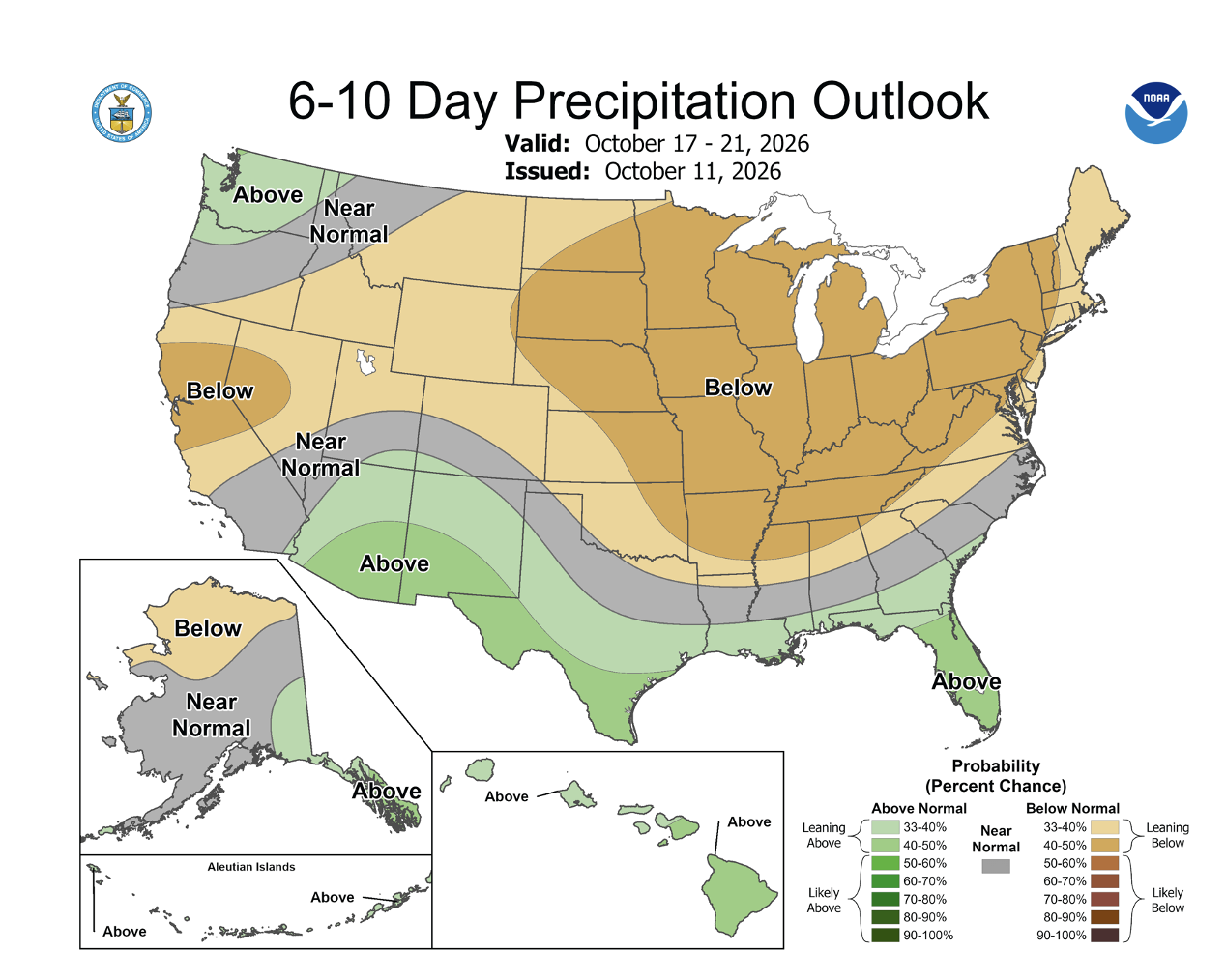
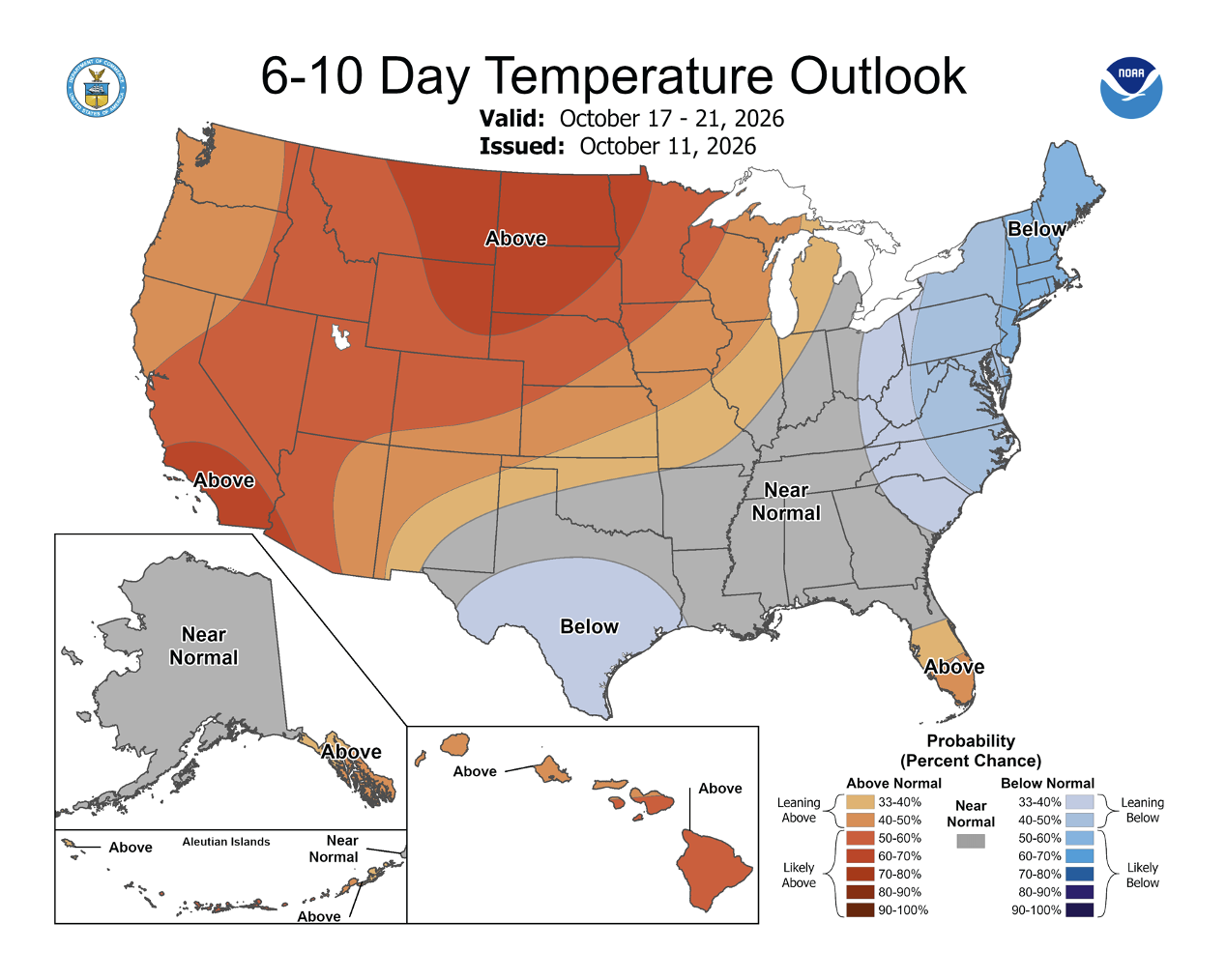
- Harvest is picking up across the Southwest, but weather is creating quality concerns across the Cotton Belt. The U.S. crop was 23% harvested at the start of last week, slightly ahead of the five-year average. Drier weather across West Texas has helped growers make progress, although rain and cooler temperatures in this week’s forecast could slow things down. Meanwhile, the Delta and Southeast have dealt with more rain, adding to concerns about cotton still open in the fields. At this point, quality is the bigger concern than production, particularly as growers try to get the crop out.
Economic and Policy Outlook
- Minutes from the Fed’s September meeting showed some officials are starting to think about how to handle potential trouble in the Treasury market as bond yields push higher. While the market is functioning normally for now, officials want to be prepared to step in if needed without getting too involved in bond buying. The Fed also raised interest rates at that meeting, and another hike before year-end is still on the table.
- The administration is trying to bring down diesel costs, but there are still plenty of questions about how the latest move will work. Early last week, President Trump signed an executive order temporarily allowing dyed diesel to be used on highways and deferring the federal fuel tax through the end of the year. However, the administration provided few details on implementation, and deferring the tax does not necessarily mean it will be forgiven. With diesel supplies already tight and harvest underway, it is hard to say how much relief this will actually provide.
Supply and Demand Overview
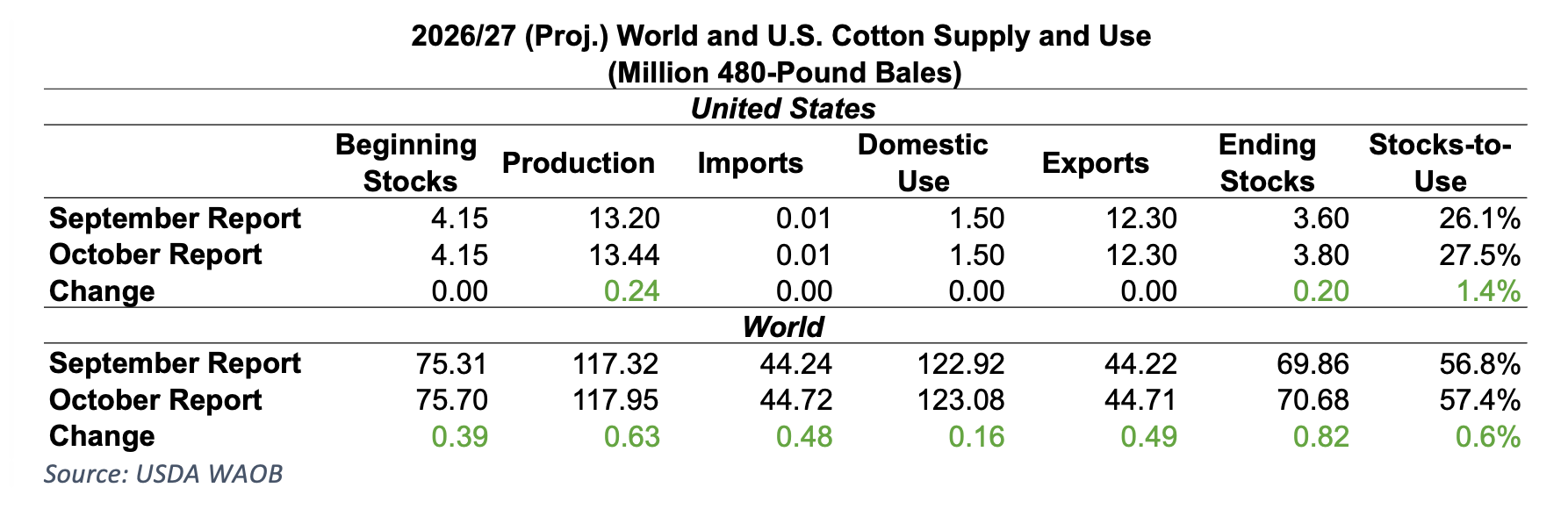
- October’s supply and demand report delivered a surprise, with USDA raising U.S. cotton production when the market was expecting a cut. Production increased 2% to 13.44 million bales as the national average yield climbed 14 pounds to 790 pounds per harvested acre. Larger crops across the Delta drove the increase, while changes in other states largely offset each other.
- The larger U.S. crop pushed ending stocks higher, with no changes to domestic consumption or exports. Mill use held at 1.50 million bales, while exports stayed at 12.30 million. Ending stocks increased 200,000 bales to 3.80 million, pushing the stocks-to-use ratio from 26.1% to 27.5%.
- The global balance sheet also grew a little heavier, with production and ending stocks both rising. World production increased 630,000 bales to 117.95 million, driven by larger crops in the U.S. and Brazil, partially offset by a smaller crop in Argentina. Brazil’s production was raised to 19.0 million bales, adding to an already competitive export market for U.S. cotton.
- Global consumption increased slightly, but not enough to offset the additional supply. World mill use rose 160,000 bales to 123.08 million. Global trade also moved higher, with exports increasing nearly 500,000 bales, largely reflecting a higher export forecast for Brazil. World ending stocks increased 820,000 bales to 70.68 million, with higher beginning stocks accounting for much of the increase.
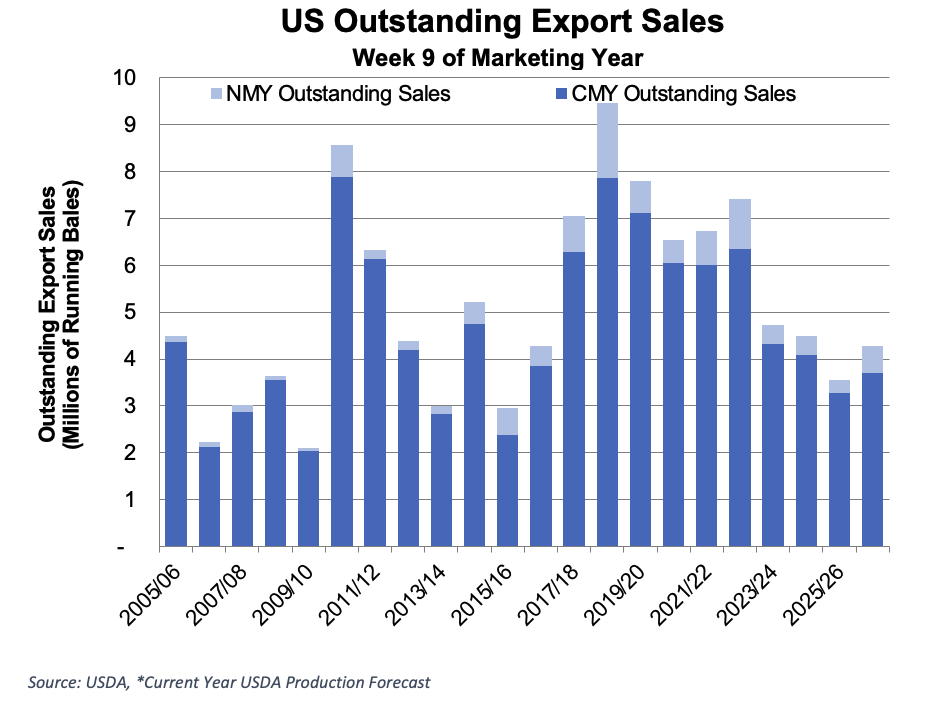
- Upland sales put together another decent week, totaling 165,100 bales. Vietnam led purchases, followed by Pakistan and India. Sales were a little lighter than the past couple of weeks, but still above the recent average. It is encouraging to see buyers showing interest at these lower prices, even if the pace has backed off a bit.
- Shipments improved slightly, but still have some catching up to do. Upland exports totaled 161,600 bales, with Vietnam, India, and Mexico the top destinations. The pace is still slower than needed, although it is not something to get too concerned about just yet.
- Pima sales moved back into positive territory, totaling roughly 3,300 bales, but shipments were light. India accounted for most of the new sales and exports, with weekly shipments totaling just 2,900 bales.
- The sales side has been a pleasant surprise recently, and there was some encouraging interest in next year’s crop as well. Another 56,100 bales were booked for 2027/28, with China accounting for most of those purchases. That is worth watching given the uncertainty surrounding trade policy, but it will take more consistent buying to really change the demand picture.
 The Seam®
- As of Friday afternoon, grower offers totaled 12,027 bales. The past week, 1,199 bales traded on the G2B platform received an average price of 75.88 cents per pound. The average loan redemption rate (LRR) was 58.92, bringing the average premium over the LRR to 16. cents per pound.
- Note: The Loan Redemption Rate (LRR) is the loan rate minus the current Loan Deficiency Payment (LDP).